ClinicaPublication

Home › Books › DNB Pathology › Previous-year questions

Free question list · June 2020 to December 2025

DNB Pathology General Pathology previous-year questions (2020–2025)

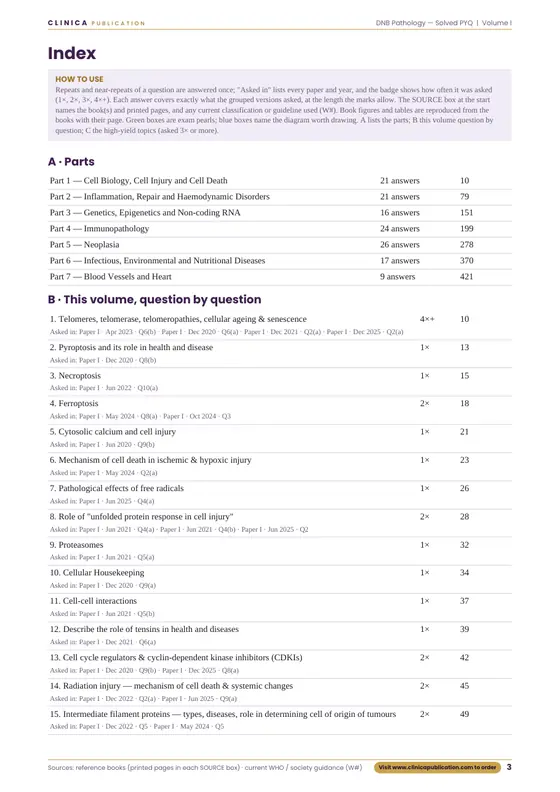
All 134 DNB Pathology Volume I theory questions from June 2020 to December 2025, topic-wise and session-wise, with how often each one has been asked. Use the list to find the high-yield topics, then read the solved answers in our printed book.

Most-asked DNB Pathology questions

These questions have been set three times or more since June 2020. The number shows how many times each was asked.

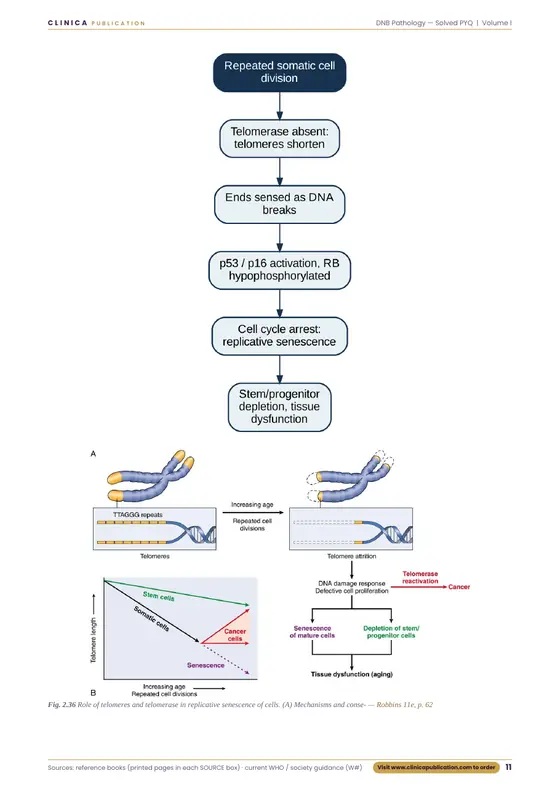
  1. Telomeres, telomerase, telomeropathies, cellular ageing & senescence 4×Volume I · Part 1 · Cell Biology, Cell Injury and Cell Death
  2. Latest marker for early diagnosis of sepsis 3×Volume I · Part 2 · Inflammation, Repair and Haemodynamic Disorders
  3. Neutrophil extracellular traps (NETs / NETosis) 3×Volume I · Part 2 · Inflammation, Repair and Haemodynamic Disorders
  4. Atherosclerosis — cellular & immunological interactions in plaque, role of neutrophils 3×Volume I · Part 2 · Inflammation, Repair and Haemodynamic Disorders
  5. Epigenetics and cancer 3×Volume I · Part 3 · Genetics, Epigenetics and Non-coding RNA
  6. Genomic imprinting & associated diseases 3×Volume I · Part 3 · Genetics, Epigenetics and Non-coding RNA
  7. Types of amyloid 3×Volume I · Part 4 · Immunopathology
  8. Describe the pathology of IgG4 related disease 3×Volume I · Part 4 · Immunopathology
  9. CAR-T cell therapy 3×Volume I · Part 5 · Neoplasia
  10. Obesity and cancer 3×Volume I · Part 6 · Infectious, Environmental and Nutritional Diseases

Topic-wise DNB Pathology previous-year questions

Grouped the way the book is organised, 1 volume and 7 parts. Open a part to see its questions, how often each was asked, and the session, paper, question number and marks.

Volume I — General Pathology, Immunology, Neoplasia, Infection and the Heart

Part 1 · Cell Biology, Cell Injury and Cell Death21 questions
  1. Telomeres, telomerase, telomeropathies, cellular ageing & senescence 4×Apr 2023 · Paper I · Q6(b) · Dec 2020 · Paper I · Q6(a) · Dec 2021 · Paper I · Q2(a) · Dec 2025 · Paper I · Q2(a)
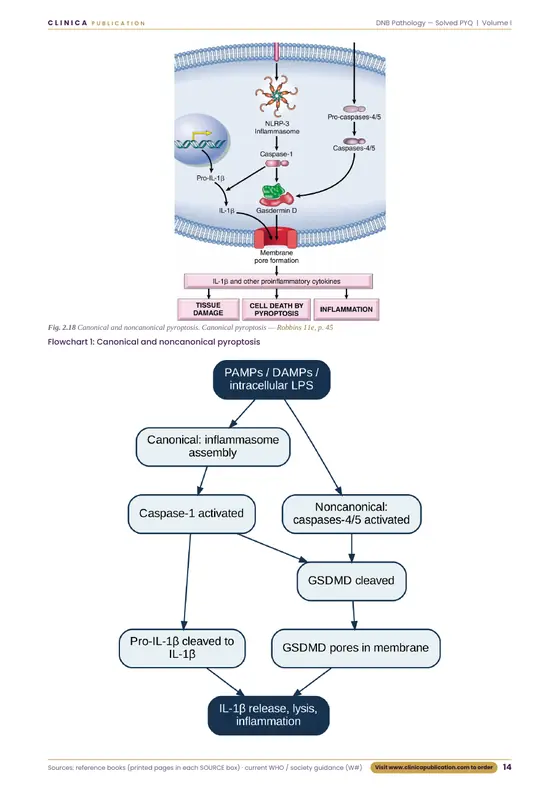
  2. Pyroptosis and its role in health and disease 1×Dec 2020 · Paper I · Q8(b)
  3. Necroptosis 1×Jun 2022 · Paper I · Q10(a)
  4. Ferroptosis 2×May 2024 · Paper I · Q8(a) · Oct 2024 · Paper I · Q3
  5. Cytosolic calcium and cell injury 1×Jun 2020 · Paper I · Q9(b)
  6. Mechanism of cell death in ischemic & hypoxic injury 1×May 2024 · Paper I · Q2(a)
  7. Pathological effects of free radicals 1×Jun 2025 · Paper I · Q4(a)
  8. Role of "unfolded protein response in cell injury" 2×Jun 2021 · Paper I · Q4(a) · Jun 2021 · Paper I · Q4(b) · Jun 2025 · Paper I · Q2
  9. Proteasomes 1×Jun 2021 · Paper I · Q5(a)
  10. Cellular Housekeeping 1×Dec 2020 · Paper I · Q9(a)
  11. Cell-cell interactions 1×Jun 2021 · Paper I · Q5(b)
  12. Describe the role of tensins in health and diseases 1×Dec 2021 · Paper I · Q6(a)
  13. Cell cycle regulators & cyclin-dependent kinase inhibitors (CDKIs) 2×Dec 2020 · Paper I · Q9(b) · Dec 2025 · Paper I · Q8(a)
  14. Radiation injury — mechanism of cell death & systemic changes 2×Dec 2022 · Paper I · Q2(a) · Jun 2025 · Paper I · Q9(a)
  15. Intermediate filament proteins — types, diseases, role in determining cell of origin of tumours 2×Dec 2022 · Paper I · Q5 · May 2024 · Paper I · Q5
  16. Pigments in health & disease / endogenous pigment disorders 2×Jun 2022 · Paper I · Q8 · Oct 2023 · Paper I · Q5
  17. Define apoptosis with examples. Discuss intrinsic pathway of apoptosis 1×Jun 2021 · Paper I · Q10
  18. Define Anoikis. Discuss the mechanism of Anoikis and its role in cancer progression 1×Apr 2023 · Paper I · Q3
  19. Autophagy — mechanism, molecular biology, role in health & disease 2×Jun 2021 · Paper I · Q3(a) · Jun 2022 · Paper I · Q9
  20. Fibrinoid necrosis 1×Jun 2020 · Paper I · Q9(a)
  21. What are the cellular responses to stress and injury. Describe briefly pathologic calcification 1×Jun 2022 · Paper I · Q1
Part 2 · Inflammation, Repair and Haemodynamic Disorders21 questions
  1. Latest marker for early diagnosis of sepsis 3×Apr 2023 · Paper I · Q6(a) · Dec 2022 · Paper I · Q9 · Jun 2020 · Paper I · Q1
  2. Describe the pathophysiology of hypovolemic shock. Discuss the expected autopsy findings in a case of death from hypovolemic shock due to upper GI bleed 1×Dec 2020 · Paper I · Q1
  3. Pathophysiology of bone healing 1×Jun 2020 · Paper I · Q10
  4. Role of growth factors in tissue repair 2×Dec 2020 · Paper I · Q7(a) · Dec 2021 · Paper I · Q3(b)
  5. Types of collagen 1×Dec 2022 · Paper I · Q2(b)
  6. Chemokines in inflammation 2×Dec 2021 · Paper I · Q1 · Jun 2025 · Paper I · Q9(b)
  7. Clinical use of inhibitors of prostaglandins & leukotrienes 1×May 2024 · Paper I · Q3(a)
  8. Neutrophil extracellular traps (NETs / NETosis) 3×Dec 2022 · Paper I · Q3(a) · Jun 2021 · Paper I · Q3(b) · Oct 2024 · Paper I · Q5
  9. Regulators of angiogenesis 2×Dec 2020 · Paper I · Q4(a) · Jun 2020 · Paper I · Q5(a)
  10. Role of angiogenesis in tissue engineering 1×Jun 2021 · Paper II · Q7(b)
  11. Atherosclerosis — cellular & immunological interactions in plaque, role of neutrophils 3×Dec 2020 · Paper I · Q3(a) · Jun 2020 · Paper I · Q6(b) · Dec 2020 · Paper III · Q5(b)
  12. Role of complement system in inflammation 1×Jun 2021 · Paper I · Q7(a)
  13. Role of complement in Renal diseases 1×Oct 2024 · Paper I · Q2
  14. Infarction — morphology, determinants & troponin in acute MI 2×Jun 2021 · Paper I · Q6(a) · Jun 2021 · Paper I · Q6(b) · May 2024 · Paper I · Q9
  15. Briefly describe stem cell harvesting in autologous stem cell transplantation (ASCT) and enumerate the complications of ASCT 1×Jun 2021 · Paper IV · Q2
  16. Discuss the emerging applications of stem cell therapy 1×Dec 2022 · Paper I · Q1
  17. Endothelium in health & disease 1×Oct 2024 · Paper I · Q10
  18. Host–prosthetic (biomaterial) interactions 1×Dec 2022 · Paper I · Q10(a)
  19. Necrotizing non-caseating granulomatous diseases — differential diagnosis & lab diagnosis 1×Dec 2022 · Paper I · Q7(a)
  20. Pseudotumours 1×Dec 2022 · Paper I · Q8(a)
  21. Pathogenesis of ascites 1×Dec 2020 · Paper I · Q7(b)
Part 3 · Genetics, Epigenetics and Non-coding RNA16 questions
  1. Karyotyping 2×Jun 2020 · Paper I · Q2 · Jun 2022 · Paper II · Q9(a)
  2. Cytogenetics testing and its utility 2×Dec 2025 · Paper II · Q4 · Jun 2021 · Paper II · Q5(b)
  3. Gene silencing 2×Jun 2020 · Paper II · Q7(a) · Oct 2024 · Paper II · Q4
  4. Micro-RNA 2×Apr 2023 · Paper I · Q9(b) · Dec 2025 · Paper I · Q1(b)
  5. Epigenetics and cancer 3×Jun 2020 · Paper I · Q4(b) · Jun 2025 · Paper I · Q8 · Dec 2021 · Paper II · Q1(a)
  6. Role of epigenetics in diabetes mellitus 1×Apr 2023 · Paper I · Q9(a)
  7. Genomic imprinting & associated diseases 3×Dec 2022 · Paper I · Q6(a) · Dec 2025 · Paper I · Q2(b) · Dec 2021 · Paper II · Q9(a)
  8. Trinucleotide (triple) repeat disorders 2×Dec 2020 · Paper I · Q5(b) · Jun 2025 · Paper I · Q10(a)
  9. Nanotechnology and gene therapy in diagnosis and therapeutics 1×Oct 2023 · Paper I · Q9
  10. CRISPR technology 1×May 2024 · Paper II · Q5(a)
  11. Pathophysiology and lab diagnosis of phenylketonuria 1×Dec 2022 · Paper I · Q6(b)
  12. Pathophysiology & lab diagnosis of alkaptonuria 1×May 2024 · Paper I · Q6(b)
  13. Mosaicism (gonadal) & chimerism 2×May 2024 · Paper I · Q8(b) · Jun 2021 · Paper II · Q10(a)
  14. Non-coding DNA — significance 2×Dec 2020 · Paper I · Q5(a) · May 2024 · Paper I · Q4(b)
  15. Single nucleotide polymorphisms & copy number variations 1×Dec 2025 · Paper I · Q1(a)
  16. Transmission patterns of single-gene disorders 1×Jun 2021 · Paper I · Q9(b)
Part 4 · Immunopathology24 questions
  1. Types of amyloid 3×Dec 2020 · Paper I · Q3(b) · May 2024 · Paper I · Q2(b) · Oct 2023 · Paper I · Q8
  2. Staining methods to demonstrate amyloid protein 1×Dec 2020 · Paper II · Q8(b)
  3. A 42-year-old male patient presented with gross cardiomegaly and an endomyocardial biopsy revealed cardiac amyloidosis. In the absence of other systemic pathology and family history, the clinician was interested to know the type of amyloid protein deposited in this case before starting appropriate therapy. By which method the amyloid protein can be typed in this case? White a short note on the platform to be used 1×Jun 2025 · Paper II · Q6
  4. Describe Type II hypersensitivity with examples 2×Jun 2021 · Paper I · Q1(a) · Jun 2021 · Paper I · Q1(b) · Jun 2025 · Paper I · Q5(a)
  5. Immune complexes - their detection and role in diseases 1×Dec 2021 · Paper II · Q6(b)
  6. Discuss the mechanisms of various types of hypersensitivity reactions 1×Jun 2022 · Paper I · Q6
  7. T-cell mediated hypersensitivity reactions 1×Oct 2023 · Paper I · Q4
  8. Toll-like receptors 2×Dec 2020 · Paper I · Q2(a) · Jun 2025 · Paper I · Q10(b)
  9. Inflammasomes 1×Dec 2020 · Paper I · Q6(b)
  10. NK cells 1×Dec 2025 · Paper I · Q10(b)
  11. Describe the approach to diagnosis of primary immunodeficiency disorders 2×Dec 2021 · Paper I · Q10 · Oct 2024 · Paper IV · Q6
  12. Severe combined immunodeficiency 1×Dec 2025 · Paper I · Q10(a)
  13. Discuss familial qualitative disorders of leucocytes 1×Dec 2022 · Paper IV · Q8(a)
  14. Spectrum of autoantibodies in SLE 2×Dec 2020 · Paper I · Q2(b) · Dec 2021 · Paper I · Q4
  15. Anti-nuclear antibodies (ANAs) 1×Dec 2025 · Paper I · Q6(a)
  16. Renal lesions in SLE 1×Oct 2023 · Paper III · Q9(a)
  17. Describe the pathology of IgG4 related disease 3×Jun 2022 · Paper I · Q5 · Oct 2023 · Paper I · Q10 · Dec 2021 · Paper III · Q2(a)
  18. Autoimmune pancreatitis 1×Jun 2025 · Paper III · Q4(a)
  19. HLA gene and autoimmunity 2×Jun 2020 · Paper I · Q5(b) · Jun 2022 · Paper I · Q2
  20. HLA typing 1×Dec 2025 · Paper I · Q3(a) · Dec 2025 · Paper I · Q3(b)
  21. Graft-versus-host disease & its differences from transplant rejection 2×Jun 2025 · Paper I · Q7 · Dec 2021 · Paper II · Q4(b)
  22. Immunological tolerance — central tolerance & autoimmunity 2×Apr 2023 · Paper I · Q10(b) · Jun 2025 · Paper I · Q5(b)
  23. T helper cell subsets 1×Dec 2021 · Paper I · Q3(a)
  24. What is T-cell and macrophage crosstalk? Give an example of how this phenomenon works 1×Jun 2025 · Paper I · Q3
Part 5 · Neoplasia26 questions
  1. Enumerate the hallmarks of cancer 1×Jun 2021 · Paper I · Q2(a) · Jun 2021 · Paper I · Q2(b)
  2. Driver mutations and passenger mutations 1×Dec 2022 · Paper I · Q3(b)
  3. The RAS oncogene in neoplasia 1×Dec 2022 · Paper I · Q7(b)
  4. Role of MYC overexpression in neoplasia 1×May 2024 · Paper I · Q7(b)
  5. BRAF mutation 1×Dec 2025 · Paper I · Q8(b)
  6. Role of T-cells in cancer 2×Jun 2020 · Paper I · Q7 · May 2024 · Paper I · Q7(a)
  7. Immune checkpoint inhibitors 2×Apr 2023 · Paper I · Q5(b) · Dec 2021 · Paper II · Q4(a)
  8. Oncogenic viruses 2×Dec 2021 · Paper I · Q2(b) · Dec 2025 · Paper I · Q4(a)
  9. Enlist occupations associated with enhanced risk for carcinogenesis 1×Oct 2023 · Paper I · Q6(a) · Oct 2023 · Paper I · Q6(b)
  10. Describe the role of p53 in neoplasia 2×Apr 2023 · Paper I · Q2 · Dec 2021 · Paper I · Q7
  11. Retinoblastoma gene 1×Jun 2025 · Paper I · Q4(b)
  12. CAR-T cell therapy 3×May 2024 · Paper I · Q1 · Oct 2023 · Paper II · Q4 · Apr 2023 · Paper IV · Q8(a)
  13. Discuss the role of epithelial mesenchymal transition in neoplastic and non-neoplastic conditions 1×Dec 2021 · Paper II · Q8
  14. What is tumour microenvironment? Describe its role in cancer progression and metastasis 1×Dec 2021 · Paper II · Q10
  15. Discuss the role of Matrix metalloproteinases in tumour invasion and metastasis and their tumorogenic effect 1×Apr 2023 · Paper I · Q1
  16. Discuss Epstein Barr Virus (EBV) associated reactive and neoplastic lymphoid proliferations in the lymph node 1×Apr 2023 · Paper III · Q4
  17. EBV oncogenesis in Haematolymphoid malignancies with emphasis on methods of its detection 1×Oct 2024 · Paper IV · Q10
  18. Targeted therapy in hematological neoplasms 1×Jun 2021 · Paper IV · Q6(a)
  19. Immunotherapy in haematolymphoid malignancies 1×Oct 2024 · Paper IV · Q1
  20. SDH-deficient neoplasia & familial paraganglioma syndromes 2×Dec 2021 · Paper II · Q6(a) · Dec 2022 · Paper III · Q9(b)
  21. SMARCA4 deficient tumours 1×Dec 2021 · Paper III · Q10
  22. SMARCB1/INI1 deficient tumors 1×Jun 2022 · Paper II · Q8(a)
  23. NTRK fusions in different tumour types & methods of detection 1×May 2024 · Paper III · Q5
  24. Tumour markers 1×Apr 2023 · Paper I · Q8(b)
  25. Monoclonality of tumours 1×Dec 2022 · Paper I · Q8(b)
  26. Cancer stem cells 1×Dec 2021 · Paper I · Q8(a)
Part 6 · Infectious, Environmental and Nutritional Diseases17 questions
  1. Obesity and cancer 3×Dec 2025 · Paper I · Q5(b) · Oct 2023 · Paper I · Q1 · Jun 2021 · Paper II · Q6
  2. Metabolic syndrome X 1×Dec 2021 · Paper I · Q5(a)
  3. Diet and cancer 1×Dec 2025 · Paper I · Q5(a)
  4. Complications of falciparum malaria and their pathogenesis 1×Dec 2021 · Paper IV · Q10(b)
  5. Hemoparasites and recent diagnostic modalities 2×Oct 2023 · Paper II · Q9(a) · Dec 2022 · Paper IV · Q6(b)
  6. Pathophysiology of Covid-19 2×Dec 2020 · Paper I · Q10 · Jun 2022 · Paper I · Q4
  7. Haematological manifestations in COVID-19 1×Jun 2021 · Paper IV · Q10(b)
  8. Discuss laboratory diagnosis of hepatitis 1×Apr 2023 · Paper III · Q9(a)
  9. What are hepatotropic viruses and why are they hepatotropic? 1×Jun 2025 · Paper I · Q6(a) · Jun 2025 · Paper I · Q6(b)
  10. Pathophysiology of osteoporosis and preventive measures against it 1×Oct 2023 · Paper I · Q7
  11. Pathophysiology of Sarcopenias and preventive measures 1×Oct 2024 · Paper I · Q8(a)
  12. Diagnosis of infectious agents in tissue — routine & special techniques 2×Dec 2021 · Paper I · Q8(b) · Oct 2023 · Paper I · Q2(a)
  13. Morphological changes in severe acute malnutrition 1×Jun 2021 · Paper I · Q7(b)
  14. Functions of Vitamin A, effects of its deficiency and toxicity 1×Oct 2023 · Paper I · Q2(b)
  15. Air pollutants — pathological effects, particulate matter & lung disease 2×Apr 2023 · Paper I · Q10(a) · Jun 2021 · Paper I · Q8
  16. Xenobiotics 2×Dec 2020 · Paper I · Q8(a) · Jun 2020 · Paper I · Q6(a)
  17. Lepra reactions 1×Dec 2025 · Paper I · Q7(b)
Part 7 · Blood Vessels and Heart9 questions
  1. Restrictive cardiomyopathy 1×Dec 2020 · Paper III · Q9(a)
  2. Hypertrophic cardiomyopathy 1×Jun 2021 · Paper III · Q5(b)
  3. Dilated cardiomyopathy 1×Jun 2025 · Paper III · Q3(a)
  4. Discuss the pathology of cardiomyopathies 1×Dec 2022 · Paper III · Q3(a)
  5. ANCA- associated vasculitis 2×May 2024 · Paper I · Q6(a) · Jun 2020 · Paper III · Q1
  6. Noninfectious vasculitis 2×Dec 2020 · Paper III · Q4(a) · Oct 2023 · Paper III · Q9(b)
  7. Cardiac (valve) vegetations 2×Apr 2023 · Paper III · Q10(a) · Jun 2025 · Paper III · Q3(b)
  8. Giant cell myocarditis 1×Oct 2023 · Paper III · Q7(a)
  9. Antibody-mediated rejection in heart transplant 1×Jun 2021 · Paper II · Q5(a)

DNB Pathology question papers, session by session

The topics set in each exam session, paper by paper and in question order, latest first.

DNB Pathology December 202516 questions

Paper I

  • Q1(a) — Single nucleotide polymorphisms & copy number variations
  • Q1(b) — Micro-RNA
  • Q2(a) — Telomeres, telomerase, telomeropathies, cellular ageing & senescence
  • Q2(b) — Genomic imprinting & associated diseases
  • Q3(a) — HLA typing
  • Q3(b) — HLA typing
  • Q4(a) — Oncogenic viruses
  • Q5(a) — Diet and cancer
  • Q5(b) — Obesity and cancer
  • Q6(a) — Anti-nuclear antibodies (ANAs)
  • Q7(b) — Lepra reactions
  • Q8(a) — Cell cycle regulators & cyclin-dependent kinase inhibitors (CDKIs)
  • Q8(b) — BRAF mutation
  • Q10(a) — Severe combined immunodeficiency
  • Q10(b) — NK cells

Paper II

  • Q4 — Cytogenetics testing and its utility
DNB Pathology June 202518 questions

Paper I

  • Q2 — Role of "unfolded protein response in cell injury"
  • Q3 — What is T-cell and macrophage crosstalk? Give an example of how this phenomenon works
  • Q4(a) — Pathological effects of free radicals
  • Q4(b) — Retinoblastoma gene
  • Q5(a) — Describe Type II hypersensitivity with examples
  • Q5(b) — Immunological tolerance — central tolerance & autoimmunity
  • Q6(a) — What are hepatotropic viruses and why are they hepatotropic?
  • Q6(b) — What are hepatotropic viruses and why are they hepatotropic?
  • Q7 — Graft-versus-host disease & its differences from transplant rejection
  • Q8 — Epigenetics and cancer
  • Q9(a) — Radiation injury — mechanism of cell death & systemic changes
  • Q9(b) — Chemokines in inflammation
  • Q10(a) — Trinucleotide (triple) repeat disorders
  • Q10(b) — Toll-like receptors

Paper II

  • Q6 — A 42-year-old male patient presented with gross cardiomegaly and an endomyocardial biopsy revealed cardiac amyloidosis. In the absence of other systemic pathology and family history, the clinician was interested to know the type of amyloid protein deposited in this case before starting appropriate therapy. By which method the amyloid protein can be typed in this case? White a short note on the platform to be used

Paper III

  • Q3(a) — Dilated cardiomyopathy
  • Q3(b) — Cardiac (valve) vegetations
  • Q4(a) — Autoimmune pancreatitis
DNB Pathology October 20249 questions

Paper I

  • Q2 — Role of complement in Renal diseases
  • Q3 — Ferroptosis
  • Q5 — Neutrophil extracellular traps (NETs / NETosis)
  • Q8(a) — Pathophysiology of Sarcopenias and preventive measures
  • Q10 — Endothelium in health & disease

Paper II

  • Q4 — Gene silencing

Paper IV

  • Q1 — Immunotherapy in haematolymphoid malignancies
  • Q6 — Describe the approach to diagnosis of primary immunodeficiency disorders
  • Q10 — EBV oncogenesis in Haematolymphoid malignancies with emphasis on methods of its detection
DNB Pathology May 202415 questions

Paper I

  • Q1 — CAR-T cell therapy
  • Q2(a) — Mechanism of cell death in ischemic & hypoxic injury
  • Q2(b) — Types of amyloid
  • Q3(a) — Clinical use of inhibitors of prostaglandins & leukotrienes
  • Q4(b) — Non-coding DNA — significance
  • Q5 — Intermediate filament proteins — types, diseases, role in determining cell of origin of tumours
  • Q6(a) — ANCA- associated vasculitis
  • Q6(b) — Pathophysiology & lab diagnosis of alkaptonuria
  • Q7(a) — Role of T-cells in cancer
  • Q7(b) — Role of MYC overexpression in neoplasia
  • Q8(a) — Ferroptosis
  • Q8(b) — Mosaicism (gonadal) & chimerism
  • Q9 — Infarction — morphology, determinants & troponin in acute MI

Paper II

  • Q5(a) — CRISPR technology

Paper III

  • Q5 — NTRK fusions in different tumour types & methods of detection
DNB Pathology October 202316 questions

Paper I

  • Q1 — Obesity and cancer
  • Q2(a) — Diagnosis of infectious agents in tissue — routine & special techniques
  • Q2(b) — Functions of Vitamin A, effects of its deficiency and toxicity
  • Q4 — T-cell mediated hypersensitivity reactions
  • Q5 — Pigments in health & disease / endogenous pigment disorders
  • Q6(a) — Enlist occupations associated with enhanced risk for carcinogenesis
  • Q6(b) — Enlist occupations associated with enhanced risk for carcinogenesis
  • Q7 — Pathophysiology of osteoporosis and preventive measures against it
  • Q8 — Types of amyloid
  • Q9 — Nanotechnology and gene therapy in diagnosis and therapeutics
  • Q10 — Describe the pathology of IgG4 related disease

Paper II

  • Q4 — CAR-T cell therapy
  • Q9(a) — Hemoparasites and recent diagnostic modalities

Paper III

  • Q7(a) — Giant cell myocarditis
  • Q9(a) — Renal lesions in SLE
  • Q9(b) — Noninfectious vasculitis
DNB Pathology April 202315 questions

Paper I

  • Q1 — Discuss the role of Matrix metalloproteinases in tumour invasion and metastasis and their tumorogenic effect
  • Q2 — Describe the role of p53 in neoplasia
  • Q3 — Define Anoikis. Discuss the mechanism of Anoikis and its role in cancer progression
  • Q5(b) — Immune checkpoint inhibitors
  • Q6(a) — Latest marker for early diagnosis of sepsis
  • Q6(b) — Telomeres, telomerase, telomeropathies, cellular ageing & senescence
  • Q8(b) — Tumour markers
  • Q9(a) — Role of epigenetics in diabetes mellitus
  • Q9(b) — Micro-RNA
  • Q10(a) — Air pollutants — pathological effects, particulate matter & lung disease
  • Q10(b) — Immunological tolerance — central tolerance & autoimmunity

Paper III

  • Q4 — Discuss Epstein Barr Virus (EBV) associated reactive and neoplastic lymphoid proliferations in the lymph node
  • Q9(a) — Discuss laboratory diagnosis of hepatitis
  • Q10(a) — Cardiac (valve) vegetations

Paper IV

  • Q8(a) — CAR-T cell therapy
DNB Pathology December 202218 questions

Paper I

  • Q1 — Discuss the emerging applications of stem cell therapy
  • Q2(a) — Radiation injury — mechanism of cell death & systemic changes
  • Q2(b) — Types of collagen
  • Q3(a) — Neutrophil extracellular traps (NETs / NETosis)
  • Q3(b) — Driver mutations and passenger mutations
  • Q5 — Intermediate filament proteins — types, diseases, role in determining cell of origin of tumours
  • Q6(a) — Genomic imprinting & associated diseases
  • Q6(b) — Pathophysiology and lab diagnosis of phenylketonuria
  • Q7(a) — Necrotizing non-caseating granulomatous diseases — differential diagnosis & lab diagnosis
  • Q7(b) — The RAS oncogene in neoplasia
  • Q8(a) — Pseudotumours
  • Q8(b) — Monoclonality of tumours
  • Q9 — Latest marker for early diagnosis of sepsis
  • Q10(a) — Host–prosthetic (biomaterial) interactions

Paper III

  • Q3(a) — Discuss the pathology of cardiomyopathies
  • Q9(b) — SDH-deficient neoplasia & familial paraganglioma syndromes

Paper IV

  • Q6(b) — Hemoparasites and recent diagnostic modalities
  • Q8(a) — Discuss familial qualitative disorders of leucocytes
DNB Pathology June 202210 questions

Paper I

  • Q1 — What are the cellular responses to stress and injury. Describe briefly pathologic calcification
  • Q2 — HLA gene and autoimmunity
  • Q4 — Pathophysiology of Covid-19
  • Q5 — Describe the pathology of IgG4 related disease
  • Q6 — Discuss the mechanisms of various types of hypersensitivity reactions
  • Q8 — Pigments in health & disease / endogenous pigment disorders
  • Q9 — Autophagy — mechanism, molecular biology, role in health & disease
  • Q10(a) — Necroptosis

Paper II

  • Q8(a) — SMARCB1/INI1 deficient tumors
  • Q9(a) — Karyotyping
DNB Pathology December 202123 questions

Paper I

  • Q1 — Chemokines in inflammation
  • Q2(a) — Telomeres, telomerase, telomeropathies, cellular ageing & senescence
  • Q2(b) — Oncogenic viruses
  • Q3(a) — T helper cell subsets
  • Q3(b) — Role of growth factors in tissue repair
  • Q4 — Spectrum of autoantibodies in SLE
  • Q5(a) — Metabolic syndrome X
  • Q6(a) — Describe the role of tensins in health and diseases
  • Q7 — Describe the role of p53 in neoplasia
  • Q8(a) — Cancer stem cells
  • Q8(b) — Diagnosis of infectious agents in tissue — routine & special techniques
  • Q10 — Describe the approach to diagnosis of primary immunodeficiency disorders

Paper II

  • Q1(a) — Epigenetics and cancer
  • Q4(a) — Immune checkpoint inhibitors
  • Q4(b) — Graft-versus-host disease & its differences from transplant rejection
  • Q6(a) — SDH-deficient neoplasia & familial paraganglioma syndromes
  • Q6(b) — Immune complexes - their detection and role in diseases
  • Q8 — Discuss the role of epithelial mesenchymal transition in neoplastic and non-neoplastic conditions
  • Q9(a) — Genomic imprinting & associated diseases
  • Q10 — What is tumour microenvironment? Describe its role in cancer progression and metastasis

Paper III

  • Q2(a) — Describe the pathology of IgG4 related disease
  • Q10 — SMARCA4 deficient tumours

Paper IV

  • Q10(b) — Complications of falciparum malaria and their pathogenesis
DNB Pathology June 202126 questions

Paper I

  • Q1(a) — Describe Type II hypersensitivity with examples
  • Q1(b) — Describe Type II hypersensitivity with examples
  • Q2(a) — Enumerate the hallmarks of cancer
  • Q2(b) — Enumerate the hallmarks of cancer
  • Q3(a) — Autophagy — mechanism, molecular biology, role in health & disease
  • Q3(b) — Neutrophil extracellular traps (NETs / NETosis)
  • Q4(a) — Role of "unfolded protein response in cell injury"
  • Q4(b) — Role of "unfolded protein response in cell injury"
  • Q5(a) — Proteasomes
  • Q5(b) — Cell-cell interactions
  • Q6(a) — Infarction — morphology, determinants & troponin in acute MI
  • Q6(b) — Infarction — morphology, determinants & troponin in acute MI
  • Q7(a) — Role of complement system in inflammation
  • Q7(b) — Morphological changes in severe acute malnutrition
  • Q8 — Air pollutants — pathological effects, particulate matter & lung disease
  • Q9(b) — Transmission patterns of single-gene disorders
  • Q10 — Define apoptosis with examples. Discuss intrinsic pathway of apoptosis

Paper II

  • Q5(a) — Antibody-mediated rejection in heart transplant
  • Q5(b) — Cytogenetics testing and its utility
  • Q6 — Obesity and cancer
  • Q7(b) — Role of angiogenesis in tissue engineering
  • Q10(a) — Mosaicism (gonadal) & chimerism

Paper III

  • Q5(b) — Hypertrophic cardiomyopathy

Paper IV

  • Q2 — Briefly describe stem cell harvesting in autologous stem cell transplantation (ASCT) and enumerate the complications of ASCT
  • Q6(a) — Targeted therapy in hematological neoplasms
  • Q10(b) — Haematological manifestations in COVID-19
DNB Pathology December 202021 questions

Paper I

  • Q1 — Describe the pathophysiology of hypovolemic shock. Discuss the expected autopsy findings in a case of death from hypovolemic shock due to upper GI bleed
  • Q2(a) — Toll-like receptors
  • Q2(b) — Spectrum of autoantibodies in SLE
  • Q3(a) — Atherosclerosis — cellular & immunological interactions in plaque, role of neutrophils
  • Q3(b) — Types of amyloid
  • Q4(a) — Regulators of angiogenesis
  • Q5(a) — Non-coding DNA — significance
  • Q5(b) — Trinucleotide (triple) repeat disorders
  • Q6(a) — Telomeres, telomerase, telomeropathies, cellular ageing & senescence
  • Q6(b) — Inflammasomes
  • Q7(a) — Role of growth factors in tissue repair
  • Q7(b) — Pathogenesis of ascites
  • Q8(a) — Xenobiotics
  • Q8(b) — Pyroptosis and its role in health and disease
  • Q9(a) — Cellular Housekeeping
  • Q9(b) — Cell cycle regulators & cyclin-dependent kinase inhibitors (CDKIs)
  • Q10 — Pathophysiology of Covid-19

Paper II

  • Q8(b) — Staining methods to demonstrate amyloid protein

Paper III

  • Q4(a) — Noninfectious vasculitis
  • Q5(b) — Atherosclerosis — cellular & immunological interactions in plaque, role of neutrophils
  • Q9(a) — Restrictive cardiomyopathy
DNB Pathology June 202013 questions

Paper I

  • Q1 — Latest marker for early diagnosis of sepsis
  • Q2 — Karyotyping
  • Q4(b) — Epigenetics and cancer
  • Q5(a) — Regulators of angiogenesis
  • Q5(b) — HLA gene and autoimmunity
  • Q6(a) — Xenobiotics
  • Q6(b) — Atherosclerosis — cellular & immunological interactions in plaque, role of neutrophils
  • Q7 — Role of T-cells in cancer
  • Q9(a) — Fibrinoid necrosis
  • Q9(b) — Cytosolic calcium and cell injury
  • Q10 — Pathophysiology of bone healing

Paper II

  • Q7(a) — Gene silencing

Paper III

  • Q1 — ANCA- associated vasculitis

Read 34 solved answers free

The free 120-page sample is taken straight from the printed DNB Pathology volumes, with the book's own page numbers. It contains:

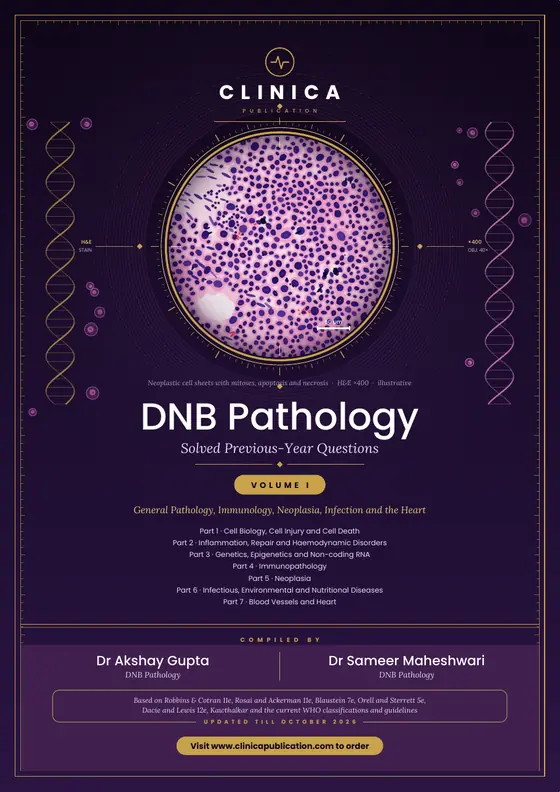
  • The Volume I cover, the complete Volume I index with the papers and years each question was asked, and the high-yield list
  • Part 1 answers: telomeres and senescence, pyroptosis, necroptosis, ferroptosis, free radicals, the unfolded protein response and more
  • Part 2 answers: sepsis markers, shock, bone healing, growth factors, chemokines, NETosis and angiogenesis
DNB Pathology free sample, page 1DNB Pathology free sample, page 3DNB Pathology free sample, page 11DNB Pathology free sample, page 14

Solved answers in the free sample

  1. Telomeres, telomerase, telomeropathies, cellular ageing & senescenceVolume I · Part 1
  2. Pyroptosis and its role in health and diseaseVolume I · Part 1
  3. NecroptosisVolume I · Part 1
  4. FerroptosisVolume I · Part 1
  5. Cytosolic calcium and cell injuryVolume I · Part 1
  6. Mechanism of cell death in ischemic & hypoxic injuryVolume I · Part 1
  7. Pathological effects of free radicalsVolume I · Part 1
  8. Role of "unfolded protein response in cell injury"Volume I · Part 1
  9. ProteasomesVolume I · Part 1
  10. Cellular HousekeepingVolume I · Part 1
  11. Cell-cell interactionsVolume I · Part 1
  12. Describe the role of tensins in health and diseasesVolume I · Part 1
  13. Cell cycle regulators & cyclin-dependent kinase inhibitors (CDKIs)Volume I · Part 1
  14. Radiation injury — mechanism of cell death & systemic changesVolume I · Part 1
  15. Intermediate filament proteins — types, diseases, role in determining cell of origin of tumoursVolume I · Part 1
  16. Pigments in health & disease / endogenous pigment disordersVolume I · Part 1
  17. Define apoptosis with examples. Discuss intrinsic pathway of apoptosisVolume I · Part 1
  18. Define Anoikis. Discuss the mechanism of Anoikis and its role in cancer progressionVolume I · Part 1
  19. Autophagy — mechanism, molecular biology, role in health & diseaseVolume I · Part 1
  20. Fibrinoid necrosisVolume I · Part 1
  21. What are the cellular responses to stress and injury. Describe briefly pathologic calcificationVolume I · Part 1
  22. Latest marker for early diagnosis of sepsisVolume I · Part 2
  23. Describe the pathophysiology of hypovolemic shock. Discuss the expected autopsy findings in a case of death from hypovolemic shock due to upper GI bleedVolume I · Part 2
  24. Pathophysiology of bone healingVolume I · Part 2
  25. Role of growth factors in tissue repairVolume I · Part 2
  26. Types of collagenVolume I · Part 2
  27. Chemokines in inflammationVolume I · Part 2
  28. Clinical use of inhibitors of prostaglandins & leukotrienesVolume I · Part 2
  29. Neutrophil extracellular traps (NETs / NETosis)Volume I · Part 2
  30. Regulators of angiogenesisVolume I · Part 2
  31. Role of angiogenesis in tissue engineeringVolume I · Part 2
  32. Atherosclerosis — cellular & immunological interactions in plaque, role of neutrophilsVolume I · Part 2
  33. Role of complement system in inflammationVolume I · Part 2
  34. Role of complement in Renal diseasesVolume I · Part 2

Frequently asked questions

How many DNB Pathology previous-year questions are there?

This page lists 134 DNB Pathology Volume I theory questions from 12 exam sessions, June 2020 to December 2025, arranged in 7 parts. Repeated questions are listed once, with every paper and year in which they were asked.

Which DNB Pathology topics are asked most often?

Telomeres, telomerase, telomeropathies, cellular ageing & senescence (4×); Latest marker for early diagnosis of sepsis (3×); Neutrophil extracellular traps (NETs / NETosis) (3×); Atherosclerosis — cellular & immunological interactions in plaque, role of neutrophils (3×); Epigenetics and cancer (3×).

Where can I find solved answers to these DNB Pathology questions?

Every question on this page is answered in full in our printed DNB Pathology General Pathology solved previous-year questions, written from Robbins & Cotran 11e, Rosai and Ackerman 11e, Blaustein 7e, Orell and Sterrett 5e, Diagnostic Cytology 3e, the Bethesda Systems, Dacie and Lewis 12e and Kawthalkar, with the current WHO classifications.

Is there a free sample of the answers?

Yes. A free 120-page sample with full answers from the book is available: read the free sample (PDF).

How should I use these questions to prepare for the DNB Pathology exam?

Start with the most-asked list, since repeated topics come back often. Then work through the topic-wise list part by part, and use the session-wise list to practise complete papers against the clock.
Get every answer in print

DNB Pathology: 134 solved answers in Volume I, printed, bound and delivered anywhere in India.

See the book